Explore the people behind the books: early Christian Fathers, monastic elders, bishops, historians, and translators. All 38 authors and contributors represented in this catalog have a dedicated page with historical context, sources, and links to their books.
The groups below are starting points for browsing. A person may have worked in more than one field. Each biography explains whether the catalog credits that person as an original author, editor, compiler, or translator.
Portraits, icons, and historical depictions introduce the writers in this library. Image details and sources accompany each illustration.
Early Christian and Byzantine writers

Image details and credit

Saint Cyril of Jerusalem
Saint Cyril of Jerusalem (c. 315–386) was a fourth-century bishop whose catechetical lectures preserve a major account of Christian instruction in Jerusalem. His teaching addresses people preparing for baptism and introduces the beliefs and life of the Church through sustained engagement with Scripture.

Image details and credit
Saint Gregory of Nyssa
Saint Gregory of Nyssa (c. 335–c. 394) was a fourth-century bishop and Greek Christian theologian, the brother of Saint Basil the Great and Saint Macrina. He is one of the Cappadocian Fathers.

Image details and credit

Saint John Cassian
Saint John Cassian (c. 360–c. 435) was a monk and Latin Christian writer who helped transmit the teaching of Egyptian monasticism to the West. His Conferences present extended conversations with elders, while the Institutes treat monastic organization and the struggle with the principal vices.

Image details and credit
Pseudo-Dionysius the Areopagite
Pseudo-Dionysius the Areopagite is the conventional scholarly name for the anonymous Christian author of the Dionysian writings, composed around the late fifth or early sixth century. The author writes under the identity of Dionysius, the Athenian converted by Paul in Acts 17.
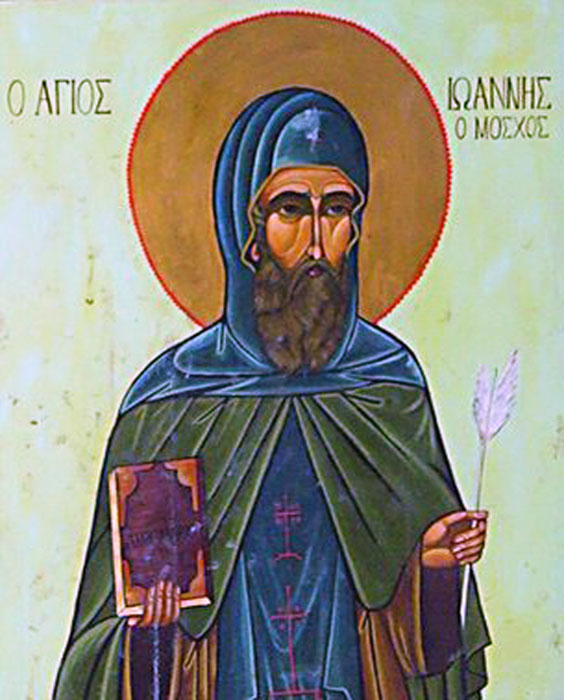
Image details and credit
Twentieth-century icon of Saint John Moschus above his tomb. Source: Drevo encyclopedia.
Saint John Moschus
John Moschus was a Greek monastic writer active in the late sixth and early seventh centuries. His Spiritual Meadow gathers stories of monks, clergy, and other Christians encountered or remembered across the eastern Mediterranean.

Image details and credit
.jpg)
Saint Maximus the Confessor
Saint Maximus the Confessor (c. 580–662) was a Byzantine monk and theologian whose defense of Christ’s full humanity included the affirmation of a human will as well as a divine will in Christ. His writings also examine prayer, love, the passions, and the transformation of human life in communion with God.

Image details and credit
Saint Isaac the Syrian
Saint Isaac the Syrian, also called Isaac of Nineveh, was a seventh-century Syriac Christian writer. After a brief period as Bishop of Nineveh, he returned to monastic solitude.

Image details and credit
Saint John of Damascus
Saint John of Damascus (c. 675–c. 750) was a Christian monk and theologian associated with Damascus and the monastery of Mar Saba near Jerusalem. He is remembered for his defense of holy images and for the Exact Exposition of the Orthodox Faith, a systematic presentation of Christian doctrine in Greek.
Abba Isaiah
Abba Isaiah is the name associated with the medieval Miterikon , a collection of instruction connected with women’s monastic life. The compiler is usually placed in the twelfth or thirteenth century.
Bishops, preachers, and spiritual teachers

Image details and credit
Metropolitan Varlaam
Metropolitan Varlaam of Moldavia (c. 1590–1657) was a monk, bishop, and major figure in the development of Romanian religious printing. He is especially associated with the Cazania , a collection of teaching for Sundays and feasts printed at Iași in 1643.
Metropolitan Isaiah Kopinsky
Isaiah Kopinsky (c. 1580–1640) was an Orthodox bishop, monastic organizer, and Metropolitan of Kyiv during the early seventeenth century. He is associated with the Spiritual Alphabet , a work of ascetical instruction that has also circulated under the name of Saint Dimitry of Rostov.
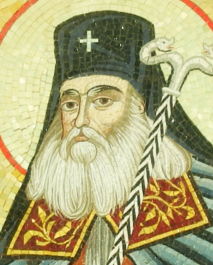
Image details and credit
Saint Anthim the Iberian
Saint Anthim the Iberian (c. 1650–1716), also called Antim Ivireanul, was a Georgian-born Orthodox bishop, printer, and preacher who became Metropolitan of Wallachia. His name is associated with religious printing in several languages and with Antim Monastery in Bucharest. “Iberian” here refers to Georgia in the Caucasus, not the Iberian Peninsula.

Image details and credit

Stefan Yavorsky
Stefan Yavorsky (1658–1722) was an Orthodox metropolitan, preacher, and theologian who served as patriarchal locum tenens during the reign of Peter I. His career belongs to a period of major change in Russian church government.

Image details and credit
.jpg)
Saint Tikhon of Zadonsk
Saint Tikhon of Zadonsk (1724–1783) was a Russian Orthodox bishop and spiritual writer. After serving the diocese of Voronezh, he spent his later years in monastic retirement.

Image details and credit
Bishop Sophronius of Vratsa
Saint Sophronius of Vratsa (1739–1813) was a Bulgarian Orthodox bishop and writer, born Stoyko Vladislavov in Kotel. His Nedelnik , printed in 1806, helped bring religious instruction to readers in accessible Bulgarian.

Image details and credit
Saint Nicodemus the Hagiorite
Saint Nicodemus the Hagiorite (1748 or 1749–1809) was a Greek Orthodox monk, editor, and spiritual writer associated with Mount Athos. Also called Nikodemos of the Holy Mountain, he helped prepare the Greek Philokalia and worked across hymnography, saints’ lives, canon law, and practical spiritual teaching.

Image details and credit
Saint Innocent of Kherson
Saint Innocent of Kherson (1800–1857) was a Russian Orthodox bishop, theological teacher, and preacher. Born Ivan Alexeyevich Borisov, he became known for sermons that brought biblical events into vivid pastoral focus.

Image details and credit

Saint Ignatius Brianchaninov
Saint Ignatius Brianchaninov (1807–1867) was a Russian Orthodox bishop and writer on monastic and spiritual life. His works address repentance, prayer, the reading of the Church Fathers, and the danger of mistaking self-deception for spiritual progress.

Image details and credit

Saint Theophan the Recluse
Saint Theophan the Recluse (1815–1894), born Georgy Govorov, was a Russian Orthodox bishop, spiritual writer, and translator. After serving as Bishop of Tambov and then Vladimir, he retired to Vysha Monastery.

Image details and credit

Saint John of Kronstadt
Saint John of Kronstadt (1829–1908), also known as Ioann Ilyich Sergiev, was a Russian Orthodox parish priest and spiritual writer. His name comes from Kronstadt, the naval town near Saint Petersburg where he served at Saint Andrew’s Cathedral.

Image details and credit

Saint Nektarios of Pentapolis
Saint Nektarios of Pentapolis (1846–1920), also known as Nectarios of Aegina, was a Greek Orthodox bishop, teacher, and monastic founder. Born Anastasios Kephalas, he served in the Patriarchate of Alexandria before working in Greece.

Image details and credit
.jpg)
Metropolitan Anthony Khrapovitsky
Metropolitan Anthony Khrapovitsky (1863–1936) was a Russian Orthodox bishop, theological educator, and the first hierarch of the Russian Orthodox Church Outside of Russia. His writings on salvation belong to a wider concern with pastoral ministry and the moral transformation of the person.
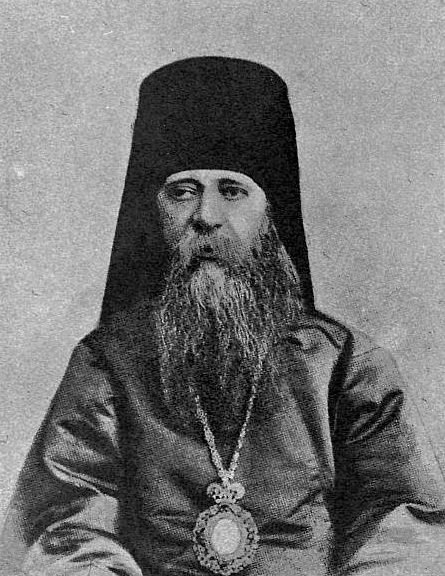
Image details and credit

Archbishop Nikon Rozhdestvensky
Archbishop Nikon Rozhdestvensky (1851–1919) was a Russian Orthodox bishop, religious publisher, and public commentator. His career is closely associated with the Trinity–Sergius Lavra and the Trinity Leaflets .
Elders and monastic writers

Image details and credit
George Mashurin, engraving, c. 1839, from the Moscow 1839 edition of his letters. Historical public-domain artwork, reproduced by the Lipetsk Metropolia.
George Mashurin
George Mashurin (1789–1836), known as George the Recluse of Zadonsk, was a Russian monastic ascetic and spiritual correspondent. After military service, he entered a monastery and spent many years in seclusion.

Image details and credit

Saint Zosima Verkhovsky
Saint Zosima Verkhovsky (1768–1833) was a Russian monk, spiritual writer, and founder of women’s monastic communities. His life is closely connected with Elder Basilisk and with periods of solitude in Siberia.
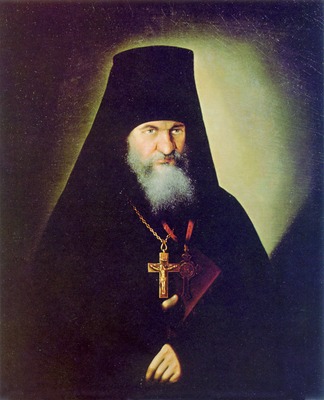
Image details and credit
Saint Macarius of Optina
Saint Macarius of Optina (1788–1860), born Mikhail Nikolayevich Ivanov, was a Russian monastic elder and spiritual correspondent. He helped make Optina a center of patristic publishing as well as personal counsel.

Image details and credit

Saint Ambrose of Optina
Saint Ambrose of Optina (1812–1891), born Alexander Grenkov, was a Russian Orthodox monk and spiritual elder at Optina Monastery . He is remembered for his personal counsel, correspondence, and care for the women’s community at Shamordino.

Image details and credit

Saint Barsanuphius of Optina
Saint Barsanuphius of Optina (1845–1913), born Pavel Ivanovich Plikhankov, was a Russian monastic elder whose earlier life included a military career. He entered Optina in middle age and became one of its well-known spiritual guides.

Image details and credit
Hieroschemamonk Sergius Vesnin
Hieroschemamonk Sergius Vesnin (1814–1853) was a Russian monk and writer associated with Mount Athos. He became known to readers as the Svyatogorets , meaning a man of the Holy Mountain.

Image details and credit
Abbess Thaisia
Abbess Thaisia of Leushino (1842–1915), born Maria Vasilyevna Solopova, was a Russian Orthodox monastic superior and writer. She led the Leushino women’s monastery and was a spiritual daughter of Saint John of Kronstadt.
Historians, scholars, compilers, and translators

Image details and credit
Saint Philaret Gumilevsky
Saint Philaret Gumilevsky (1805–1866), also called Philaret of Chernigov, was a Russian Orthodox bishop and church historian. His work ranged across Russian church history, the Fathers, hymnographers, and lives of saints.
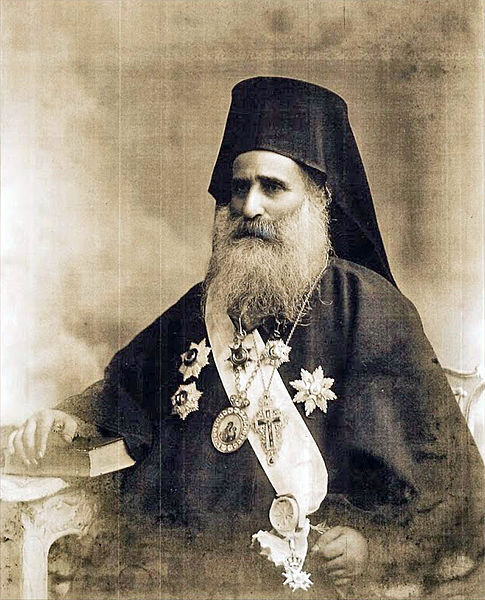
Image details and credit
Historical photograph of Metropolitan Philaret Vafeidis. Source: Markos Markou’s episcopal archive.
Philaret Vafeidis
Philaret Vafeidis (also Vapheides; died 1933) was a Greek Orthodox metropolitan, teacher, and church historian. His Ecclesiastical History belongs to the scholarly world of the Halki theological school and the Ecumenical Patriarchate.

Image details and credit
Ivan I. Dmitrevsky
Ivan Ivanovich Dmitrevsky (1754–1823) was a Russian teacher, translator, and writer on Orthodox worship. His best-known work is a historical, dogmatic, and mystical explanation of the Divine Liturgy.

Image details and credit

Alexander Dmitrievich Belyaev
Alexander Dmitrievich Belyaev (1849–1919) was a Russian Orthodox theologian and professor at the Moscow Theological Academy. His writings include studies of divine love and Christian eschatology.

Image details and credit

A. P. Lopukhin
Alexander Pavlovich Lopukhin (1852–1904) was a Russian Orthodox biblical scholar, teacher, and editor. His name is closely associated with the Explanatory Bible , a large commentary series begun near the end of his life and continued by other scholars after his death.
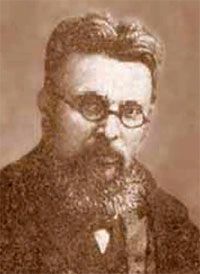
Image details and credit
Historical portrait of Archpriest Grigory Dyachenko. Source: Church of the Descent of the Holy Spirit at the former Lazarevskoye Cemetery.
Archpriest Grigory Dyachenko
Archpriest Grigory Dyachenko (1850–1903) was a Russian Orthodox priest, teacher, and prolific compiler of religious literature. His publications included preaching resources and a Church Slavonic dictionary.

Image details and credit

E. A. Wallis Budge
E. A. Wallis Budge (1857–1934) was a British museum curator, language scholar, and translator. In this library his role is the English translator of The Paradise of the Holy Fathers. He was not the original author of the ancient monastic stories and sayings collected in that work.

Image details and credit
.jpg)
Sergey Alexandrovich Nilus
Sergey Alexandrovich Nilus (1862–1929) was a Russian religious writer associated with accounts of monastic life and the reception of traditions concerning Saint Seraphim of Sarov. His book Great in the Small belongs to that religious output.
Explore a monastic community
The Optina Monastery reference page connects the lives of its elders with the history of the monastery and its publishing work. The reading guides offer paths through the books when you prefer to begin with a subject.